
Key Takeaways / Summary:
- Steep roof pitches allow heavy snow to shed quickly, reducing weight stress on structural supports.
- Low-slope roofs slow down water runoff, increasing the need for continuous waterproof membranes.
- Selecting materials tailored to your specific roof slope prevents ice dam formation and costly storm damage.
Montana winters bring severe weather and heavy snow accumulation. Sprague Roofing provides expert commercial and residential roofing solutions designed to stand up to these harsh local elements.
Understanding roof pitch is one of the most critical factors in designing a system that protects your property year after year.
Understanding Roof Pitch, Snow Load, and Drainage Efficiency
Roof pitch refers to the steepness or incline of your roof surface, expressed as a ratio of vertical rise to horizontal run. In a climate with heavy snowfall, this slope dictates how well your structure manages heavy loads and moisture.
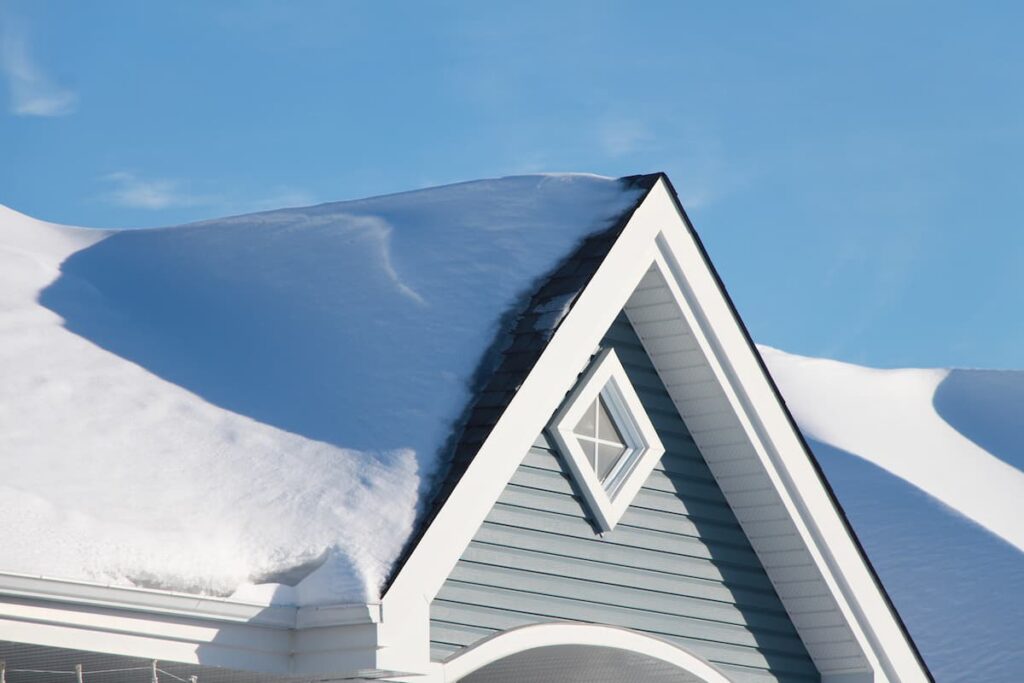
Steeper pitches use gravity to shed snow naturally before it piles up. This automatic shedding reduces the overall weight burden on the framing underneath. Conversely, lower slopes tend to hold onto snow accumulation longer. When snow sits on a roof through fluctuating temperatures, water runoff can slow down.
Proper pitch calculation ensures that as snow melts, water moves swiftly toward drainage points rather than pooling on top of the structure.
Risks of Improper Roof Slope in Montana’s Heavy Snow Climate
An improper roof slope in Billings introduces significant risks to your home or business:
- Structural Failure: Excess snow load on a slope that is too flat can strain rafters and roof trusses, leading to sagging or sudden collapses.
- Ice Dam Formation: Flat or minimally pitched roofs hold melting snow. As meltwater flows toward colder eaves, it freezes into ice dams that trap subsequent water runoff.
- Moisture Intrusion: Trapped standing water works its way under shingles or flashing, causing interior leaks, wood rot, and mold growth.
- Accelerated Wear: Constant freeze-thaw pressure on poor drainage areas degrades surfaces rapidly, shortening total lifespan.
Comparing Roofing Materials for Low, Moderate, and Steep Pitches
Different slopes require specific roofing materials for snow and moisture management to help ensure optimal performance.
Low-slope or flat systems need continuous, seamless protection. Single-ply membranes like TPO or EPDM excel on low pitches because they prevent standing water from penetrating joints.
Moderate pitches handle standard asphalt shingles well, provided proper underlayment and ice shields are installed. Shingles offer versatile styling and reliable runoff management on standard residential homes.
Steep pitches perform exceptionally well with standing seam metal roofing or synthetic tiles. Snow slides effortlessly off smooth metal surfaces, preventing massive weight build-up entirely.
Protect Your Montana Property: Consult Sprague Roofing for Expert System Design
Designing or replacing a roof system in Montana requires localized knowledge and precision engineering. Our team delivers high-quality exterior solutions, including roof installation, repair, siding, painting, and window and door replacement.
“This is the second time that we have used Sprague roofing…. Everyone was professional and efficient from start to finish. They were meticulous about the cleanup and made sure there was no nail left behind. If we need another roof we will call them again. We highly recommend Sprague Roofing.” – L.S., Google Reviews
Protect your home or business before the next severe storm hits. Contact us to get started! You can also request a complimentary inspection to ensure your property remains safe and dry all year long.